3.3 搜索算法-深度优先搜索
深度优先搜索
1 概述
定义
- 深度优先搜索(DFS:Depth-First Search)是一种图搜索策略,其将搜索限制到 2 种操作:
- 访问图中的一个节点;
- 访问该节点的子节点;
过程
在深度优先搜索中,对于最新发现的顶点,如果它还有以此为起点而未探测到的边,就沿此边继续探测下去。当顶点 v 的所有边都已被探寻过后,搜索将回溯到发现顶点 v 有起始点的那些边。这一过程一直进行到已发现从源顶点可达的所有顶点为止。实际上深度优先搜索最初的探究也是为了解决迷宫问题。
对图的深度优先搜索与对树(Tree)的深度优先遍历(Depth First Traversal)是类似的,区别在于图中可能存在环,所以可能会遍历到已经遍历的节点。
例子
- 例如,下面的图中,从顶点 2 开始遍历,当遍历到顶点 0 时,子顶点为 1 和 2,而顶点 2 已经遍历过,如果不做标记,遍历过程将陷入死循环。所以,在 DFS 的算法实现中需要对顶点是否访问过做标记。
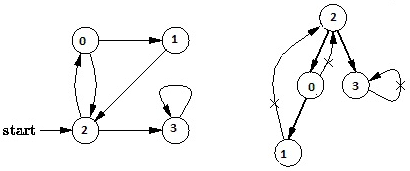
- 上图的 DFS 遍历结果为 2, 0, 1, 3。
实现
- DFS 算法可以通过不同方式来实现:
- 递归方式
- 非递归方式:栈(Stack)数据结构来存储遍历图中节点的中间状态;
时间复杂度
- 深度优先搜索(DFS)的时间复杂度为 O(V+E),V 即 Vertex 顶点数量,E 即 Edge 边数量。
DFS算法的递归方式伪码
1 | 1 procedure DFS(G,v): |
DFS算法的非递归方式伪码
1 | 1 procedure DFS-iterative(G,v): |
DFS算法实现代码如下:
1 | 1 using System; |
本博客所有文章除特别声明外,均采用 CC BY-NC-SA 4.0 许可协议。转载请注明来源 Estom的博客!
相关推荐

2021-03-16
12 深搜与广搜
深度优先搜索与广度优先搜索 用来处理多分支结构 对于现行问题或单分支结构的问题。不适用深度搜索和广度搜索 1 深度搜索 深度优先搜索属于图算法的一种,是一个针对图和树的遍历算法,英文缩写为DFS即Depth First Search。深度优先搜索是图论中的经典算法,利用深度优先搜索算法可以产生目标图的相应拓扑排序表,利用拓扑排序表可以方便的解决很多相关的图论问题,如最大路径问题等等。一般用堆数据结构来辅助实现DFS算法。其过程简要来说是对每一个可能的分支路径深入到不能再深入为止,而且每个节点只能访问一次。 深度优先搜索与回溯剪枝这两个思想有一个非常重要的优势。它是一条路经走到黑。如果这条路径合适的话,就可以直接返回。另外。当前所有的搜索选项中,只有一条路径在工作。也就是说只需要记录当前一条路径的状态。所以解决迷宫问题的时候,不需要复杂的状态记录方法。只需要记录当前这一个分支的路径状态即可。 2 广度搜索 广度优先搜索(也称宽度优先搜索,缩写BFS,以下采用广度来描述)是连通图的一种遍历算法这一算法也是很多重要的图的算法的原型。Dijkstra单源最短路径算法和Prim最小生成...
2021-03-12
0 数据结构基础
数据结构基础 参考文献 易佰教程 1 简介数据结构的组成 数据结构主要包括两部分。 数据的结构。包括存储结构和逻辑结构。存储结构决定在其在计算机内存中的表现形式和具有的特点。逻辑结构决定了“数据”内部之间的关联结构。 数据的规则。基于数据的存储结构和逻辑结构。衍生出数据的一系列基本操作。包括创建、遍历、插入、删除等,每一类数据结构都有其相应的基础操作。 本目录主要讲解了。数据的结构和数据的规则。以及这两个东西的实现方法。不包括在这些数据的和数据的规则之上的更顶层的算法。如基于前序遍历(数据的规则)的什么什么算法(上层的算法)。 数据结构预算法 基本术语数据结构是任何程序或软件的构建块(基础块)。为程序选择适当的数据结构对于程序员来说是最困难的任务。就数据结构而言,使用以下术语 - 数据:数据可以定义为基本值或值集合,例如,学生的姓名和ID,成绩等就是学生的数据。 组项:具有从属数据项的数据项称为组项,例如,学生的姓名由名字和姓氏组成。 记录:记录可以定义为各种数据项的集合,例如,如果以学生实体为例,那么学生的名称,地址,课程和标记可以组合在一起形成学生的记录。...

2021-03-13
2.1 单链表
单链表1 简介概念 单链表是有序元素集的集合。元素的数量可以根据程序的需要而变化。 单链表中的节点由两部分组成:数据部分和链接部分。 节点的数据部分存储将由节点表示的实际信息,而节点的链接部分存储其直接后继的地址。 单向链或单链表可以仅在一个方向上遍历。也就是说每个节点只包含下一个节点的指针,因此不能反向遍历链表。 链表复杂度 操作 平均复杂度 最坏复杂度 访问 θ(n) θ(n) 搜索 θ(n) θ(n) 插入 θ(1) θ(1) 删除 θ(1) θ(1) 2 链表的存储和实现链表的存储 链表不需要连续存在于存储器中。节点可以是存储器中的任何位置并链接在一起以形成链表。这实现了空间的优化利用。 链表的实现 链表通过结构体和指针实现 1234567struct node { int data; struct node *next; }; struct node *head, *ptr; ptr = (struct node *)malloc(sizeof(struct node *)); ...
2020-01-04
3.2 搜索算法-广度优先搜索
广度优先搜索1 概述特点 广度优先搜索(BFS:Breadth-First Search)是一种树和图搜索策略,其将搜索限制到 2 种操作: 访问图中的一个节点; 访问该节点的邻居节点; 过程 广度优先搜索(BFS)由 Edward F. Moore 在 1950 年发表,起初被用于在迷宫中寻找最短路径。在 Prim 最小生成树算法和 Dijkstra 单源最短路径算法中,都采用了与广度优先搜索类似的思想。 对图的广度优先搜索与对树(Tree)的广度优先遍历(Breadth First Traversal)是类似的,区别在于图中可能存在环,所以可能会遍历到已经遍历的节点。BFD 算法首先会发现和源顶点 s 距离边数为 k 的所有顶点,然后才会发现和 s 距离边数为 k+1 的其他顶点。 例子 例如,下面的图中,从顶点 2 开始遍历,当遍历到顶点 0 时,邻接的顶点为 1 和 2,而顶点 2 已经遍历过,如果不做标记,遍历过程将陷入死循环。所以,在 BFS 的算法实现中需要对顶点是否访问过做标记。 上图的 BFS 遍历结果为 [ 2, 0, 3, 1 ]。 实...

2022-12-05
29.红黑树和平衡二叉树有什么区别
红黑树和平衡二叉树有什么区别?数据结构属于理解一些源码和技术所必备的知识,比如要读懂 Java 语言中 TreeMap 和 TreeSet 的源码就要懂红黑树的数据结构,不然是无法理解源码中关于红黑树数据的操作代码的,比如左旋、右旋、添加和删除操作等。因此本课时我们就来学习一下数据结构的基础知识,方便看懂源码或者是防止面试中被问到。 我们本课时的面试题是,红黑树和二叉树有什么区别? 典型回答要回答这个问题之前,我们先要弄清什么是二叉树?什么是红黑树? 二叉树(Binary Tree)二叉树(Binary Tree)是指每个节点最多只有两个分支的树结构,即不存在分支大于 2 的节点,二叉树的数据结构如下图所示: 这是一棵拥有 6 个节点深度为 2(深度从 0 开始),并且根节点为 3 的二叉树。 二叉树有两个分支通常被称作“左子树”和“右子树”,而且这些分支具有左右次序不能随意地颠倒。 二叉查找树一棵空树或者满足以下性质的二叉树被称之为二叉查找树: 若任意节点的左子树不为空,则左子树上所有节点的值均小于它的根节点的值; 若任意节点的右子树不为空,则右子树上所有节点的值均大于或等...
2021-04-08
4.3 解释器
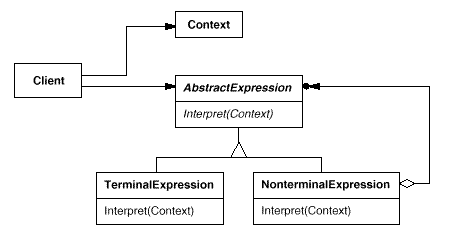
意图 给定一个语言,定义它的文法的一种表示,并定义一个解释器,这个解释器使用该表示来解释语言中的句子。 Given a language, define a represention for its grammar along with aninterpreter that uses the representation to interpret sentences in the language. 结构 参与者 AbstractExpression 声明一个抽象的解释操作,这个接口为抽象语法树中所有的节点所共享。 TerminalExpression 实现与文法中的终结符相关联的解释操作。 一个句子中的每一个终结符需要该类的一个实例。 NonterminalExpression 对文法中的规则的解释操作。 Context 包含解释器之外的一些全局信息。 Client 构建表示该语法定义的语言中一个特定的句子的抽象语法树。 调用解释操作 适用性 当有个语言需要解释执行,并且你可将该语言中的句子表示为一个抽象语法树时,可以使用Interpreter 模...