3.6 线性时间选择算法
线性时间选择算法
1 问题概述
- 在一个由 n 个元素组成的集合中,第 i 个顺序统计量(order statistic)是该集合中第 i 小的元素。也就是说,最小值是第 1 个顺序统计量(i = 1),最大值是第 n 个顺序统计量(i = n)。
- 中位数(median)是它所在集合的中点元素。当 n 为奇数时,中位数是唯一的,出现在 i = (n + 1)/2 处。当 n 为偶数时,存在两个中位数,下中位数 i = n/2 和上中位数 i = n/2 + 1 处。因此,不考虑 n 的奇偶性,中位数总是出现在 i = (n+1)/2 的中位数处。本文中所用的中位数总是指下中位数。
- 选择最大值和最小值
- 选择中位数或任意位置值
1 选择最大值和最小值
算法原理
对于确定最大值和最小值的问题,n-1 次比较是最优的。
对于同时获取最大值和最小值,至多需要 3(n/2) 次比较就足以同时找到。如果 n 是奇数,那么总共需要 3(n/2) 次比较。如果 n 是偶数,则可先做一次初始比较,接着做 3((n - 2)/2) 次比较。
代码实现
1 | 1 class Program |
2 选择中位数或任意位置值
RANDOMIZED-SELECT 算法采用快速排序算法的思想。区别是,快速排序会递归地处理划分的两边,而 RANDOMIZED-SELECT 则只处理一边。所以快速排序的期望运行时间是 Θ(n lg n),而 RANDOMIZED-SELECT 的期望运行时间为 Θ(n)。
RANDOMIZED-SELECT 的最坏运行时间为 Θ(n2),即使是要选择最小元素也是如此。因为它是随机化的,该算法的平均情况性能较好。
1 | 1 public class QuickFindAlgorithm |
3 分治法选择最大最小值
问题描述
在一个整数组 A[1…n]中,同时寻找最大值和最小值。
算法原理
- 非递归算法
1 | 1. x ← A[1]; y ← A[1] |
递归算法
- 将数组分割成两半:A [1… n/2] 和A [(n/2) +1… n]。(设 n 为2的幂 )
- 在每一半中找到最大值和最小值,并返回这两个最小值中的最小值及这两个最大值中的最大值。
1 | Procedure minmax (low, high) |
算法效率
O(n)
书上给的分治法是O(log n)我觉得不对
本博客所有文章除特别声明外,均采用 CC BY-NC-SA 4.0 许可协议。转载请注明来源 Estom的博客!
相关推荐
2021-03-09
4 UML笔记之规则和公共机制
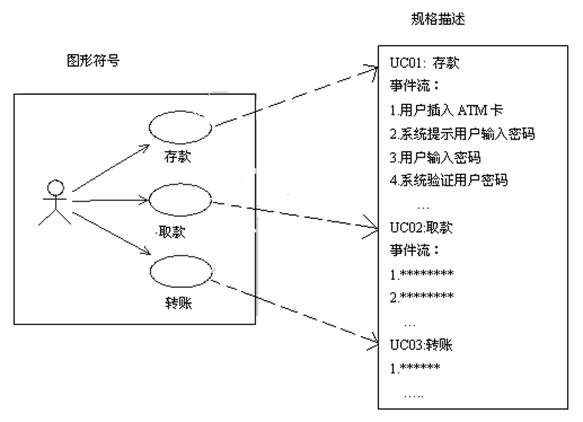
规则 在UML中,代表事物的元素符号在使用时应遵守一系列规则,每个元素必须遵守的3种语义规则如下: l 名称:每个元素应该有一个名字,即,事物、关系和图都应该有一个名字。和任何语言一样,名字即是一个标识符。 l 范围:每个元素起作用的范围。相当于程序设计语言中变量的“作用域”。 l 可见性:我们知道,UML元素可能属于一个类或包中,因此,所有元素都具有可见属性。在UML中,为元素定义了4种可见性,如表2-4所示。 表2-4 UML元素的可见性 元素的可见性 规 则(假设被访问的元素在包中) 标准表示法 public 任一元素若能访问包,则就可以访问包中的元素它 + protected 只有包中的元素或子包才能访问它 # private 只有包中的元素才能访问它 - package 只有声明在同一个包中的元素才能访问该元素 ~ 公共机制 在UML语言中,定义了4种公共机制:规格描述、修饰、通用划分和扩展机制。 规格描述 在UML语言中,对每一个元素有一个图形符号来表示,同时,对每个图形符号的语义有一个详细的文字描...
2020-01-05
4.5 约瑟夫问题
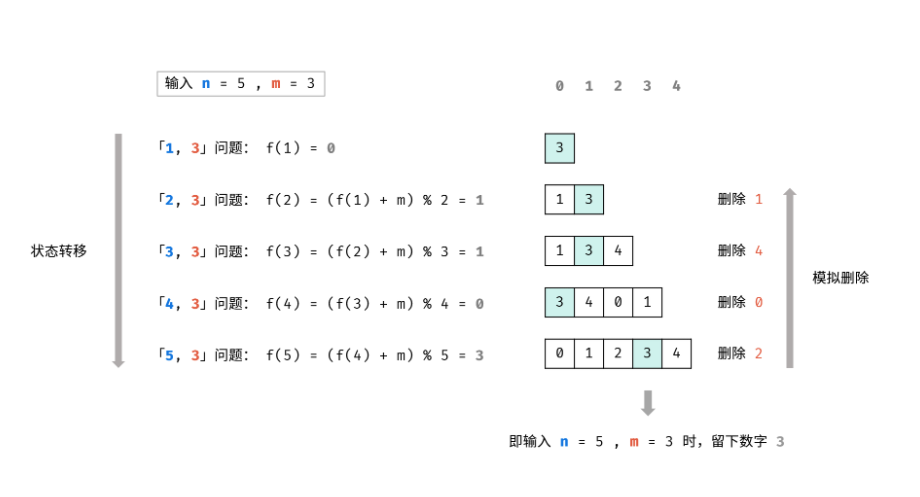
约瑟夫问题问题描述一堆人围城环。每次淘汰第m个人。最终剩下谁。 问题分析算法设计我们将上述问题建模为函数 f(n, m),该函数的返回值为最终留下的元素的序号。 首先,长度为 n 的序列会先删除第 m % n 个元素,然后剩下一个长度为 n - 1 的序列。那么,我们可以递归地求解 f(n - 1, m),就可以知道对于剩下的 n - 1 个元素,最终会留下第几个元素,我们设答案为 x = f(n - 1, m)。 由于我们删除了第 m % n 个元素,将序列的长度变为 n - 1。当我们知道了 f(n - 1, m) 对应的答案 x 之后,我们也就可以知道,长度为 n 的序列最后一个删除的元素,应当是从 m % n 开始数的第 x 个元素。因此有 f(n, m) = (m % n + x) % n = (m + x) % n。 算法分析算法实现 递归 12345678910111213class Solution { int f(int n, int m) { if (n == 1) { ...
2022-12-19
05 Set
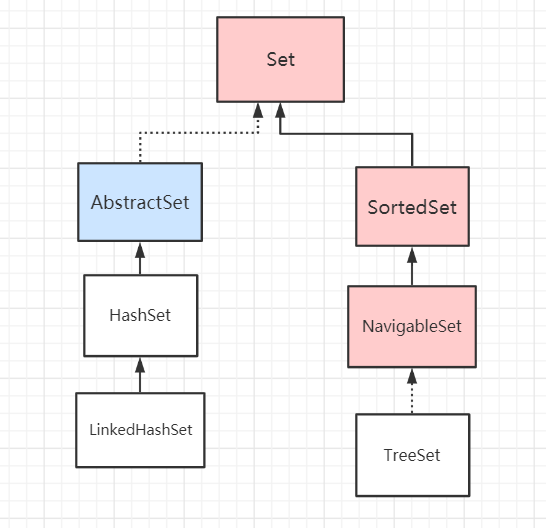
0 Set 接口Set接口Set接口继承了Collection接口,是一个不包括重复元素的集合,更确切地说,Set 中任意两个元素不会出现 o1.equals(o2),而且 Set 至多只能存储一个 NULL 值元素,Set 集合的组成部分可以用下面这张图概括: 在 Set 集合体系中,我们需要着重关注两点: 存入可变元素时,必须非常小心,因为任意时候元素状态的改变都有可能使得 Set 内部出现两个相等的元素,即 o1.equals(o2) = true,所以一般不要更改存入 Set 中的元素,否则将会破坏了 equals() 的作用! Set 的最大作用就是判重,在项目中最大的作用也是判重! 接下来我们去看它的实现类和子类: AbstractSet 和 SortedSet AbstractSet 抽象类AbstractSet 是一个实现 Set 的一个抽象类,定义在这里可以将所有具体 Set 集合的相同行为在这里实现,避免子类包含大量的重复代码 所有的 Set 也应该要有相同的 hashCode() 和 equals() 方法,所以使用抽象类把该方法重写后,子类无需关...

2021-03-27
3.2 单调队列
1 队列的最大值问题描述 请定义一个队列并实现函数 max_value 得到队列里的最大值,要求函数max_value、push_back 和 pop_front 的均摊时间复杂度都是O(1)。 若队列为空,pop_front 和 max_value 需要返回 -1 示例 1: 1234输入: ["MaxQueue","push_back","push_back","max_value","pop_front","max_value"][[],[1],[2],[],[],[]]输出: [null,null,null,2,1,2] 链接 问题分析策略选择 数据结构:单调队列 算法思想:后入的较大值,会把之前的较大值排除。但是后入的次大值,不会将之前的最大值排出队列。所以维护两个队列,一个用来删除元素,一个用来找到最大值(单调队列) 算法设计 本算法基于问题的一个重要性质:当一个元素进入队列的时候,它前面所有比它小的元素就不会再对答案产生影响。 举个...

2021-04-05
5.4 并查集
并查集 参考文献 https://zhuanlan.zhihu.com/p/93647900/ https://blog.csdn.net/qq_41754350/article/details/81271567 1 概念定义并查集被很多OIer认为是最简洁而优雅的数据结构之一,主要用于解决一些元素分组的问题。它管理一系列不相交的集合,并支持两种操作: 合并(Union):把两个不相交的集合合并为一个集合。 查询(Find):查询两个元素是否在同一个集合中。 2 并查集原理初始化 初始化所有的节点的根节点是自己。 假如有编号为1, 2, 3, …, n的n个元素,我们用一个数组fa[]来存储每个元素的父节点(因为每个元素有且只有一个父节点,所以这是可行的)。一开始,我们先将它们的父节点设为自己。 查询 我们用递归的写法实现对代表元素的查询:一层一层访问父节点,直至根节点(根节点的标志就是父节点是本身)。要判断两个元素是否属于同一个集合,只需要看它们的根节点是否相同即可。 合并 合并操作也是很简单的,先找到两个集合的代表元素,然后将前者的...
2022-12-19
04 Queue
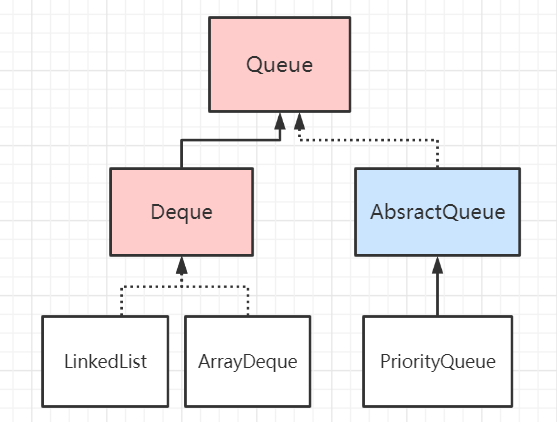
Queue0 Queue介绍主要方法Queue队列,在 JDK 中有两种不同类型的集合实现:单向队列(AbstractQueue) 和 双端队列(Deque) Queue 中提供了两套增加、删除元素的 API,当插入或删除元素失败时,会有两种不同的失败处理策略。 方法及失败策略 插入方法 删除方法 查找方法 抛出异常 add() remove() get() 返回失败默认值 offer() poll() peek() 选取哪种方法的决定因素:插入和删除元素失败时,希望抛出异常还是返回布尔值 add() 和 offer() 对比: 在队列长度大小确定的场景下,队列放满元素后,添加下一个元素时,add() 会抛出 IllegalStateException异常,而 offer() 会返回 false 。 但是它们两个方法在插入某些不合法的元素时都会抛出三个相同的异常。 remove() 和 poll() 对比: 在队列为空的场景下, remove() 会抛出 NoSuchElementException异常,而 poll() 则返回 null 。 get()和...