4 算法
算法
参考文献
1 泛型算法概览
说明
- 容器的迭代器使得算法不依赖于容器。但算法依赖于元素类型的操作。
- 标准库仅仅提供了100多个算法
头文件
| 头文件 | 功能 |
|---|---|
<algorithm> |
算法函数 |
<numeric> |
数值算法 |
<functional> |
函数对象/仿函数 |
分类
| No. | 分类 |
|---|---|
| 1 | 非可变序列算法Non-modifying sequence operations(不直接修改容器内容的算法。) |
| 2 | 可变序列算法Modifying sequence operations(可以修改容器内容的算法。) |
| 3 | 排序算法Sorting/Partitions/Binary search/(对序列排序、合并、搜索算法操作。) |
| 4 | 数值算法Merge/Heap/Min/max(对容器内容进行数值计算。) |
参数说明
| 参数 | 说明 |
|---|---|
| beg | 开始迭代器 |
| end | 终止迭代器 |
| val | 值 |
| n | 整数 |
| func | 操作函数。用于操作。 |
| pred | ==比较函数。返回true/false。用于搜索。 |
| cmp | 大小比较函数,返回true/false。用于排序。 |
| binary | 判断函数,返回true/false。用于判断。 |
1.1 基础算法(遍历算法)
检查
- 检查谓词是否对范围中所有、任一或无元素为 true
| 函数 | 作用 |
|---|---|
| all_of(beg,end,binary) | 检查所有的元素是否满足binary |
| any_of(beg,end,binary) | 检查任意的元素是否满足binary |
| none_of(beg,end,binary) | 检查没有元素满足binary |
遍历变换
| 函数 | 作用 |
|---|---|
| for_each(beg,end,func) | 将[beg,end)范围内所有元素依次调用函数func,返回func。可以使用func修改序列中的元素。但必须传递引用参数 |
| transform(beg,end,res,func) | 将[beg,end)范围内所有元素依次调用函数unary,结果放入res中。 |
| transform(beg1,end1,beg2,res,binary) | 将[beg,end)范围内所有元素与[beg2,beg2+end-beg)中所有元素依次调用函数binary,结果放入res中。 |
最大最小
| 函数 | 作用 |
|---|---|
| max(a,b) | 返回两个元素中较大一个。 |
| max(a,b,cmp) | 使用自定义比较操作cmp,返回两个元素中较大一个。 |
| max_element(beg,end) | 返回一个ForwardIterator,指出[beg,end)中最大的元素。 |
| max_element(beg,end,cmp) | 使用自定义比较操作cmp,返回一个ForwardIterator,指出[beg,end)中最大的元素。 |
| min(a,b) | 返回两个元素中较小一个。 |
| min(a,b,cmp) | 使用自定义比较操作cmp,返回两个元素中较小一个。 |
| min_element(beg,end) | 返回一个ForwardIterator,指出[beg,end)中最小的元素。 |
| min_element(beg,end,cmp) | 使用自定义比较操作cmp,返回一个ForwardIterator,指出[beg,end)中最小的元素。 |
| minmax(beg,end) | 返回一个pair,包含最小最大值 |
| minmax(beg,end,cmp) | 自定义比较函数 |
| minmax_element(beg,end) | 返回一个pair,包含最大最小值的位置 |
| minmax_element(beg,end,cmp) | 自定义比较函数 |
1.2 排序算法(12个)
排序
| 函数 | 作用 |
|---|---|
| sort(beg,end) | 默认升序重新排列元素 |
| sort(beg,end,comp) | 使用函数comp代替比较操作符执行sort()。排序sort使用快排进行排序。排序过程中的cmp表示是否将第一个参数移到第二个参数之前。如果是true则会发生移动。如果不是true则不会发生移动。 |
| partition(beg,end,pred) | 元素重新排序,使用pred函数,把结果为true的元素放在结果为false的元素之前。 |
| stable_sort(beg,end) | 与sort()类似,保留相等元素之间的顺序关系。 |
| stable_sort(beg,end,pred) | 使用函数pred代替比较操作符执行stable_sort()。 |
| stable_partition(beg,end) | 与partition()类似,保留容器中的相对顺序。 |
| stable_partition(beg,end,pred) | 使用函数pred代替比较操作符执行stable_partition()。 |
| partial_sort(beg,mid,end) | 部分排序,被排序元素个数放到[beg,end)内。 |
| partial_sort(beg,mid,end,comp) | 使用函数comp代替比较操作符执行partial_sort()。 |
| partial_sort_copy (beg1,end1,beg2,end2) | 与partial_sort()类似,只是将[beg1,end1)排序的序列复制到[beg2,end2)。 |
| partial_sort_copy (beg1,end1,beg2,end2,comp) | 使用函数comp代替比较操作符执行partial_sort_copy()。 |
| nth_element(beg,nth,end) | 单个元素序列重新排序,使所有小于第n个元素的元素都出现在它前面,而大于它的都出现在后面。 |
| nth_element(beg,nth,end,comp) | 使用函数comp代替比较操作符执行nth_element()。 |
反转
| 函数 | 作用 |
|---|---|
| reverse(beg,end) | 元素重新反序排序。 |
| reverse_copy(beg,end,res) | 与reverse()类似,结果写入res。 |
| rotate(beg,mid,end) | 元素移到容器末尾,由mid成为容器第一个元素。 |
| rotate_copy(beg,mid,end,res) | 与rotate()类似,结果写入res |
随机
| 函数 | 作用 |
|---|---|
| random_shuffle(beg,end) | 元素随机调整次序。 |
| random_shuffle(beg,end,gen) | 使用函数gen代替随机生成函数执行random_shuffle()。 |
1.3 查找算法(13个)
判断容器中是否包含某个值
统计
| 函数 | 作用 |
|---|---|
| count(beg,end,val) | 利用==操作符,对[beg,end)的元素与val进行比较,返回相等元素个数。 |
| count_if(beg,end,pred) | 使用函数pred代替==操作符执行count()。 |
查找(查找某个值)
| 函数 | 作用 |
|---|---|
| find(beg,end,val) | 利用==操作符,对[beg,end)的元素与val进行比较。当匹配时结束搜索,返回该元素的InputIterator。 |
| find_if(beg,end,pred) | 使用函数pred代替==操作符执行find()。 |
| find_first_of(beg1,end1,beg2,end2) | 在[beg1,end1)范围内查找[beg2,end2)中任意一个元素的第一次出现。返回该元素的Iterator。 |
| find_first_of(beg1,end1,beg2,end2,pred) | 使用函数pred代替==操作符执行find_first_of()。返回该元素的Iterator。 |
| find_end(beg1,end1,beg2,end2) | 在[beg1,end1)范围内查找[beg2,end2)最后一次出现。找到则返回最后一对的第一个ForwardIterator,否则返回end1。 |
| find_end(beg1,end1,beg2,end2,pred) | 使用函数pred代替==操作符执行find_end()。返回该元素的Iterator。 |
| adjacent_find(beg,end) | 对[beg,end)的元素,查找一对相邻重复元素,找到则返回指向这对元素的第一个元素的ForwardIterator。否则返回end。 |
| adjacent_find(beg,end,pred) | 使用函数pred代替==操作符执行adjacent_find()。 |
搜索(搜索某个序列)
| 函数 | 作用 |
|---|---|
| search(beg1,end1,beg2,end2) | 在[beg1,end1)范围内查找[beg2,end2)首一次出现,返回一个ForwardIterator,查找成功,返回[beg1,end1)内第一次出现[beg2,end2)的位置,查找失败指向end1。 |
| search(beg1,end1,beg2,end2,pred) | 使用函数pred代替==操作符执行search()。 |
| search_n(beg,end,n,val) | 在[beg,end)范围内查找val出现n次的子序列 |
| search_n(beg,end,n,val,pred) | 使用函数pred代替==操作符执行search_n()。 |
| binary_search(beg,end,val) | 在[beg,end)中查找val,找到返回true。 |
| binary_search(beg,end,val,comp) | 使用函数comp代替比较操作符执行binary_search()。 |
边界
| 函数 | 作用 |
|---|---|
| lower_bound(beg,end,val) | 在[beg,end)范围内的可以插入val而不破坏容器顺序的第一个位置,返回一个ForwardIterator。 |
| lower_bound(beg,end,val,comp) | 使用函数comp代替比较操作符执行lower_bound()。 |
| upper_bound(beg,end,val) | 在[beg,end)范围内插入val而不破坏容器顺序的最后一个位置,该位置标志一个大于val的值,返回一个ForwardIterator。 |
| upper_bound(beg,end,val,comp) | 使用函数comp代替比较操作符执行upper_bound()。 |
| equal_range(beg,end,val) | 返回一对iterator,第一个表示lower_bound,第二个表示upper_bound。 |
| equal_range(beg,end,val,comp) | 使用函数comp代替比较操作符执行lower_bound()。 |
1.4 填充复制移除替换算法19个
填充
| 函数 | 作用 |
|---|---|
| fill(beg,end,val) | 将值val赋给[beg,end)范围内的所有元素。 |
| fill_n(beg,n,val) | 将值val赋给[beg,beg+n)范围内的所有元素。 |
| generate(beg,end,func) | 连续调用函数func填充[beg,end)范围内的所有元素。 |
| generate_n(beg,n,func) | 连续调用函数func填充[beg,beg+n)范围内的所有元素。 |
复制
| 函数 | 作用 |
|---|---|
| copy(beg,end,res) | 复制[beg,end)到res |
| copy_backward(beg,end,res) | 与copy()相同,不过元素是以相反顺序被拷贝。 |
移除
| 函数 | 作用 |
|---|---|
| remove(beg,end,val) | 删除[beg,end)内所有等于val的元素。注意,该函数不是真正删除函数。 |
| remove_if(beg,end,pred) | 删除[beg,end)内pred结果为true的元素。 |
| remove_copy(beg,end,res,val) | 将所有不等于val元素复制到res,返回OutputIterator指向被拷贝的末元素的下一个位置。 |
| remove_copy_if(beg,end,res,pred) | 将所有使pred结果为true的元素拷贝到res。 |
替换
| 函数 | 作用 |
|---|---|
| replace(beg,end,oval,nval) | 将[beg,end)内所有等于oval的元素都用nval代替。 |
| replace_copy(beg,end,res,oval,nval) | 与replace()类似,不过将结果写入res。 |
| replace_if(beg,end,pred,nval) | 将[beg,end)内所有pred为true的元素用nval代替。 |
| replace_copy_if(beg,end,res,pred,nval) | 与replace_if(),不过将结果写入res。 |
去重
| 函数 | 作用 |
|---|---|
| unique(beg,end) | 清除序列中相邻重复元素,不能真正删除元素。重载版本使用自定义比较操作。 |
| unique(beg,end,pred) | 将所有使pred结果为true的相邻重复元素去重。 |
| unique_copy(beg,end,res) | 与unique类似,不过把结果输出到res。 |
| unique_copy(beg,end,res,pred) | 与unique类似,不过把结果输出到res。 |
交换
| 函数 | 作用 |
|---|---|
| swap(a,b) | 交换存储在a与b中的值。 |
| swap_range(beg1,end1,beg2) | 将[beg1,end1)内的元素[beg2,beg2+beg1-end1)元素值进行交换。 |
| iter_swap(it_a,it_b) | 交换两个ForwardIterator的值。 |
1.5 算术算法(4个)
#inlcude<numeric>
| 函数 | 作用 |
|---|---|
| accumulate(beg,end,val) | 对[beg,end)内元素之和,加到初始值val上。 |
| accumulate(beg,end,val,binary) | 将函数binary代替加法运算,执行accumulate()。 |
| partial_sum(beg,end,res) | 将[beg,end)内该位置前所有元素之和放进res中。 |
| partial_sum(beg,end,res,binary) | 将函数binary代替加法运算,执行partial_sum()。 |
| adjacent_difference(beg1,end1,res) | 将[beg,end)内每个新值代表当前元素与上一个元素的差放进res中。 |
| adjacent_difference(beg1,end1,res,binary) | 将函数binary代替减法运算,执行adjacent_difference()。 |
| inner_product(beg1,end1,beg2,val) | 对两个序列做内积(对应元素相乘,再求和)并将内积加到初始值val上。 |
| inner_product(beg1,end1,beg2,val,binary1,binary2) | 将函数binary1代替加法运算,将binary2代替乘法运算,执行inner_product()。 |
1.6 关系算法(4个)
| 函数 | 作用 |
|---|---|
| equal(beg1,end1,beg2) | 判断[beg1,end1)与[beg2,end2)内元素都相等 |
| equal(beg1,end1,beg2,pred) | 使用pred函数代替默认的==操作符。 |
| includes(beg1,end1,beg2,end2) | 判断[beg1,end1)是否包含[beg2,end2),使用底层元素的<操作符,成功返回true。重载版本使用用户输入的函数。 |
| includes(beg1,end1,beg2,end2,comp) | 将函数comp代替<操作符,执行includes()。 |
| lexicographical_compare(beg1,end1,beg2,end2) | 按字典序判断[beg1,end1)是否小于[beg2,end2) |
| lexicographical_compare(beg1,end1,beg2,end2,comp) | 将函数comp代替<操作符,执行lexicographical_compare()。 |
| mismatch(beg1,end1,beg2) | 并行比较[beg1,end1)与[beg2,end2),指出第一个不匹配的位置,返回一对iterator,标志第一个不匹配元素位置。如果都匹配,返回每个容器的end。 |
| mismatch(beg1,end1,beg2,pred) | 使用pred函数代替默认的==操作符。 |
1.7 集合算法(6个)
| 函数 | 作用 |
|---|---|
| merge(beg1,end1,beg2,end2,res) | 合并[beg1,end1)与[beg2,end2)存放到res。 |
| merge(beg1,end1,beg2,end2,res,comp) | 将函数comp代替<操作符,执行merge()。 |
| inplace_merge(beg,mid,end) | 合并[beg,mid)与[mid,end),结果覆盖[beg,end)。 |
| inplace_merge(beg,mid,end,cmp) | 将函数comp代替<操作符,执行inplace_merge()。 |
| set_union(beg1,end1,beg2,end2,res) | 取[beg1,end1)与[beg2,end2)元素并集存放到res。 |
| set_union(beg1,end1,beg2,end2,res,comp) | 将函数comp代替<操作符,执行set_union()。 |
| set_intersection(beg1,end1,beg2,end2,res) | 取[beg1,end1)与[beg2,end2)元素交集存放到res。 |
| set_intersection(beg1,end1,beg2,end2,res,comp) | 将函数comp代替<操作符,执行set_intersection()。 |
| set_difference(beg1,end1,beg2,end2,res) | 取[beg1,end1)与[beg2,end2)元素内差集存放到res。 |
| set_difference(beg1,end1,beg2,end2,res,comp) | 将函数comp代替<操作符,执行set_difference()。 |
| set_symmetric_difference(beg1,end1,beg2,end2,res) | 取[beg1,end1)与[beg2,end2)元素外差集存放到res。 |
1.8 排序组合算法(两个)
| 函数 | 作用 |
|---|---|
| next_permutation(beg,end) | 取出[beg,end)内的下移一个排列。 |
| next_permutation(beg,end,comp) | 将函数comp代替<操作符,执行next_permutation()。 |
| prev_permutation(beg,end) | 取出[beg,end)内的上移一个排列。 |
| prev_permutation(beg,end,comp) | 将函数comp代替<操作符,执行prev_permutation()。 |
1.9 堆算法(4个)
| 函数 | 作用 |
|---|---|
| is_heap(beg,end[,comp]) | 检查给定范围是否为一个最大堆 |
| is_heap_until(beg,end[,comp]) | 查找能成为最大堆的最大子范围 |
| make_heap(beg,end) | 把[beg,end)内的元素生成一个堆。 |
| make_heap(beg,end,comp) | 将函数comp代替<操作符,执行make_heap()。 |
| push_heap(beg,end) | 假设first到last-1是一个有效堆,要被加入到堆的元素存放在位置last-1,重新生成堆。在指向该函数前,必须先把元素插入容器后。 |
| push_heap(beg,end,comp) | 将函数comp代替<操作符,执行push_heap()。 |
| pop_heap(beg,end) | 重新排序堆。它把first和last-1交换,然后重新生成一个堆。可使用容器的back来访问被”弹出”的元素或者使用pop_back进行真正的删除。并不真正把最大元素从堆中弹出。 |
| pop_heap(beg,end,comp) | 将函数comp代替<操作符,执行pop_heap()。 |
| sort_heap(beg,end) | 对[beg,end)内的序列重新排序。 |
| sort_heap(beg,end,comp) | 将函数comp代替<操作符,执行push_heap()。 |
2 泛型算法的结构
五类迭代器
泛型算法只要能够提供五个迭代器类别,所有到的泛型算法都能够执行。每个算法都会对他的每个迭代器指明提供哪类迭代器。
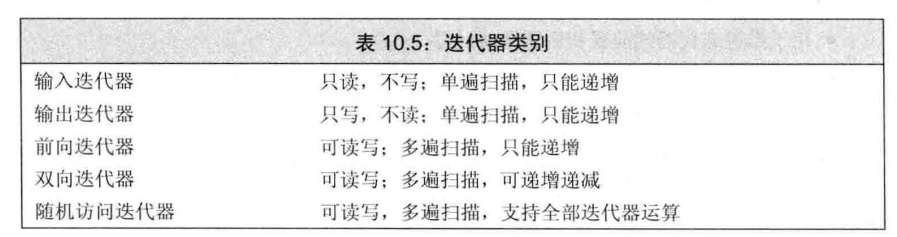
输入迭代器
- 可以读取序列中的元素
- 比较两个迭代器的运算符==,!=
- 推进迭代器前置或后置的递增运算符++
- 用于读取元素的解引用运算符* ->
输出迭代器
- 可以向序列中写入元素
- 用于推进迭代器前置和后置的递增运算
- 用于写入的解引用运算符。只能是左值。
前向迭代器
- 只能沿一个方向运动
双向迭代器
- 可以正反两个方向运动。支持++和–
随机访问迭代器
- 常量时间内随机访问序列中任意元素的能力。下标访问。
- 用于比较迭代器相对位置的关系运算符< > <= >=,基于随机访问能力。
- 迭代器和一个整数值的加减运算 + += - -=
- 用于计算迭代器距离的运算符-。基于随机访问能力
- 下标运算符[]。提供随机访问能力
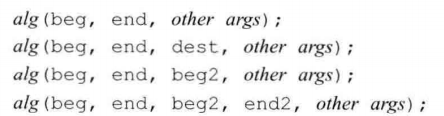
算法的形参模式
- 必然是一下四中形式之一
- 接受单个目标迭代器的算法
- 接受第二个输入序列的算法
算法的命名规范
- 算法有多个重载版本
- _if结尾多加一个谓词。可以传递一个函数。
- _copy结尾,表示多加一个序列用来拷贝结果。
3 特定容器算法
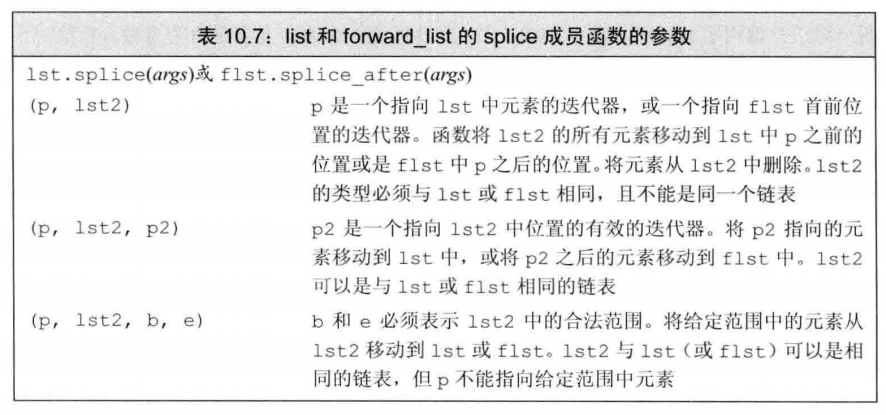
list和forward_list的特定算法
- 成员函数中的算法
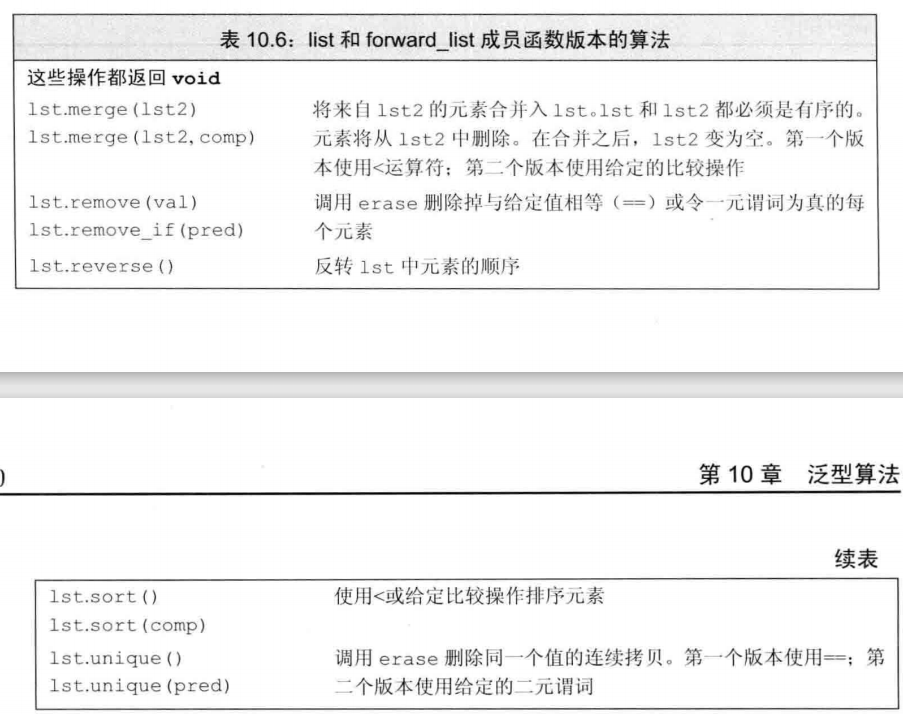
- splice算法
本博客所有文章除特别声明外,均采用 CC BY-NC-SA 4.0 许可协议。转载请注明来源 Estom的博客!
相关推荐

2020-09-25
11数学运算
数学函数(Mathematical functions)三角函数 method description sin(x, /[, out, where, casting, order, …]) 正弦函数, element-wise. cos(x, /[, out, where, casting, order, …]) 余弦函数 element-wise. tan(x, /[, out, where, casting, order, …]) 正切函数, element-wise. arcsin(x, /[, out, where, casting, order, …]) 反正弦函数, element-wise. arccos(x, /[, out, where, casting, order, …]) 反余弦函数, element-wise. arctan(x, /[, out, where, casting, order, …]) 反正切函数, element-wise. hypot(x1,...

2020-07-21
4 高阶函数
1 高阶函数定义JavaScript的函数其实都指向某个变量。既然变量可以指向函数,函数的参数能接收变量,那么一个函数就可以接收另一个函数作为参数,这种函数就称之为高阶函数。 123456789function add(x, y, f) { return f(x) + f(y);}x = -5;y = 6;f = Math.abs;f(x) + f(y) ==> Math.abs(-5) + Math.abs(6) ==> 11;return 11; 2 MapReducemap:对集合分割运算。reduce:对分割运算的结果进行聚合。 array.mapmap()方法本身可以接受一个函数,作用在数组的每一个元素,并拼接成新的数组。是一个高阶函数。 123456789function pow(x) { return x * x;}var arr = [1, 2, 3, 4, 5, 6, 7, 8, 9];var results = arr.map(pow); // [1, 4, 9, 16, 25, 36, 49,...
2021-03-09
5 列表与元组
>列表简介 >>是一种内建的数据结构,用来存储一系列的元素 >>同JS一样,由于解释性语言不必声明数据类型,所以数组的元素也可以很灵或的不相同。 >列表的运算 index索引运算:[] 切片运算:[:] 拼接运算+ 重复运算* 成员运算in 长度运算len() 循环for() >列表方法: list.intex()可以返回任意的方法 my_list[2] = a #元素赋值 my_list.append()#末尾追加元素 my_list.extend()#末尾追加子表 my_list.insert()#任意位置插入元素 my_list.pop()结尾删除元素 my_lise.sort()#排序 my_list.remove()#删除任意位置元素 my_list.reverse()#倒序 >列表应用 >>内建函数:sum()求和,max()求最大值,min()求最小值 >>列...

2020-09-25
9字符串运算
字符串操作numpy.char 模块为类型 numpy.string_ 或的数组提供了一组向量化的字符串操作numpy.unicode_。它们全部基于Python标准库中的字符串方法。 字符串操作 方法 描述 add(x1, x2) 返回两个str或unicode数组的按元素的字符串连接。 multiply(a, i) 返回(a * i),即按元素方式的字符串多重连接。 mod(a, values) 返回(a%i),这是Python 2.6之前的字符串格式(迭代),针对一对str或unicode的array_likes元素。 capitalize(a) 返回的拷贝一个只有资本的每个元素的第一个字符。 center(a, width[, fillchar]) 返回的拷贝一与在长度的字符串居中其元素宽度。 decode(a[, encoding, errors]) 按元素调用str.decode。 encode(a[, encoding, errors]) 逐元素调用str.encode。 expandtabs(a[, tabsize]) 返回每...
2020-01-05
4.5 约瑟夫问题
约瑟夫问题问题描述一堆人围城环。每次淘汰第m个人。最终剩下谁。 问题分析算法设计我们将上述问题建模为函数 f(n, m),该函数的返回值为最终留下的元素的序号。 首先,长度为 n 的序列会先删除第 m % n 个元素,然后剩下一个长度为 n - 1 的序列。那么,我们可以递归地求解 f(n - 1, m),就可以知道对于剩下的 n - 1 个元素,最终会留下第几个元素,我们设答案为 x = f(n - 1, m)。 由于我们删除了第 m % n 个元素,将序列的长度变为 n - 1。当我们知道了 f(n - 1, m) 对应的答案 x 之后,我们也就可以知道,长度为 n 的序列最后一个删除的元素,应当是从 m % n 开始数的第 x 个元素。因此有 f(n, m) = (m % n + x) % n = (m + x) % n。 算法分析算法实现 递归 12345678910111213class Solution { int f(int n, int m) { if (n == 1) { ...

2021-12-24
return
return从函数中退出并返回数值。 概要1return [n] 主要用途 使得shell函数退出并返回数值,如果没有指定n的值,则默认为函数最后一条命令执行的返回状态。 参数n(可选):整数。 返回值返回值为你指定的参数n的值,如果你指定的参数大于255或小于0,那么会通过加或减256的方式使得返回值总是处于0到255之间。 在函数外执行return语句会返回失败。 例子123456789#!/usr/bin/env bash# 定义一个返回值大于255的函数example() { return 259}# 执行函数example# 显示3echo $? 注意 该命令是bash内建命令,相关的帮助信息请查看help命令。