2.1 进程的基本概念

关系概述

  • 程序不能独立运行。只能作为进程执行。程序是静态的,进程是动态的。
  • 程序有两种执行方式:程序的顺序执行和程序的并发执行。并发执行通过多进程实现。

1 程序的顺序执行

程序顺序执行时的特征

  1. 顺序性。严格按照程序规定的特征执行
  2. 封闭性。程序运行时独占全机资源。程序一旦开始,其结果不受外界影响。
  3. 可再现性。只要程序运行的环境和初始条件相同,结果相同

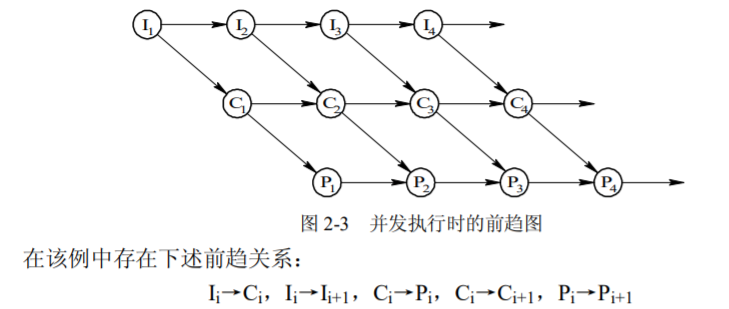
2 前驱图

定义

  • 前趋图(Precedence Graph)是一个有向无环图,记为 DAG(Directed Acyclic Graph),用于描述进程之间执行的前后关系。图中的每个结点可用于描述一个程序段或进程,乃至一条语句;结点间的有向边则用于表示两个结点之间存在的偏序(Partial Order,亦称偏序关系)或前趋关系(Precedence Relation)“→”。
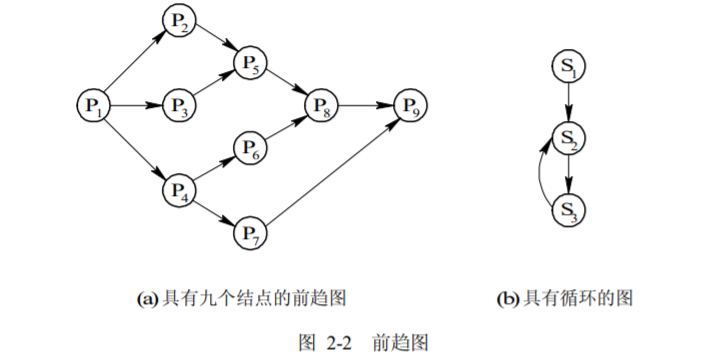
3 程序的并发执行

定义

  • 程序并发执行的前驱图表示

程序并发执行时的特征

  1. 间断性。执行-暂停-执行,间断性活动。
  2. 失去封闭性。多个程序共享系统中的各个资源。
  3. 不可再现性。其计算结果与并发执行的进程有关。相互影响。

4 进程的定义和特征

进程的定义

  • 操作系统用来实现程序并发执行的实体。
  • 作为操作系统资源分配独立运行的基本单位。

进程的特征

  • 结构特征:由程序段、数据段和 PCB 三部分便构成了进程实体。
  • 并发性:这是指多个进程实体同存于内存中,且能在一段时间内同时运行。
  • 动态性:进程的实质是进程实体的一次执行过程,包含创建、调度、撤销。进程具有一定的生命周期。程序是一组指令的集合,是静态的。
  • 独立性:独立性是指进程实体是一个能独立运行、独立分配资源和独立接受调度的基本单位。
  • 异步性:这是指进程按各自独立的、 不可预知的速度向前推进,或说进程实体按异步方式运行。

进程的构成

  1. (OS管理程序的)数据结构PCB
  2. (运行程序的)内存代码段Code
  3. (运行程序的)内存数据段Data
  4. (运行程序的)通用寄存器信息Register
  5. (OS控制程序的)程序状态字信息PSW

5 进程的状态

就绪状态、执行状态、阻塞状态

  1. 就绪(Ready)状态:当进程已分配到除 CPU 以外的所有必要资源后,只要再获得 CPU,便可立即执行,进程这时的状态称为就绪状态。就绪队列管理就绪状态的进程。
  2. 执行状态:进程已获得 CPU,其程序正在执行。在单处理机系统中,只有一个进程处于执行状态;在多处理机系统中,则有多个进程处于执行状态。
  3. 阻塞状态:正在执行的进程由于发生某事件而暂时无法继续执行时,放弃处理机而处于暂停状态,把这种暂停状态称为阻塞状态。

3态模型的转换
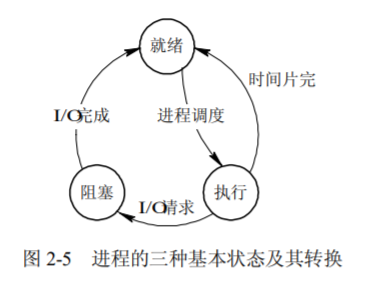
  1. 运行态→等待态:等待资源、I/O、信号
  2. 等待态→就绪态:资源满足、I/O结束、信号完成
  3. 就绪态→运行态;处理器空闲时选择更高优先权进程抢占
  4. 运行态→就绪态:运行时间片刻、有更高优先权进程

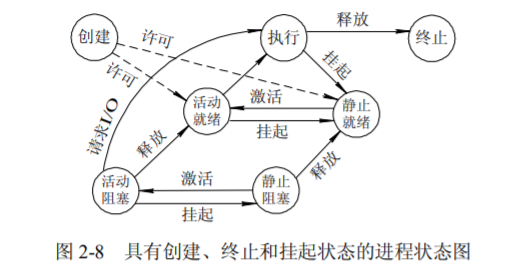
挂起状态

  • 由于终端用户的请求、父进程请求、负荷调节的需要、操作系统的需要。程序需要暂时挂起。不再接受操作系统的调度。

5态模型的转换(挂起)
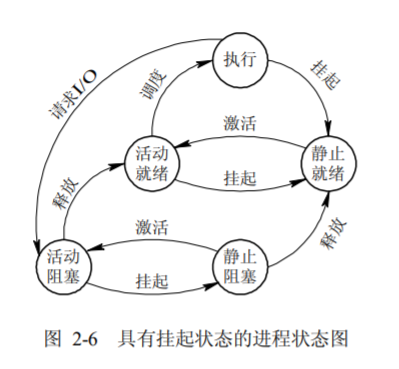
  1. 活动就绪→静止就绪。当进程处于未被挂起的就绪状态时,称此为活动就绪状态,表示为 Readya。当用挂起原语 Suspend 将该进程挂起后,该进程便转变为静止就绪状态,表示为 Readys,处于 Readys 状态的进程不再被调度执行。
  2. 活动阻塞→静止阻塞。当进程处于未被挂起的阻塞状态时,称它是处于活动阻塞状态,表示为 Blockeda。当用 Suspend 原语将它挂起后,进程便转变为静止阻塞状态,表示为Blockeds。
  3. 静止就绪→活动就绪。处于 Readys 状态的进程,若用激活原语 Active 激活后,该进程将转变为 Readya 状态。
  4. 静止阻塞→活动阻塞。处于 Blockeds 状态的进程,若用激活原语 Active 激活后,该进程将转变为 Blockeda 状态。

创建状态、终止状态

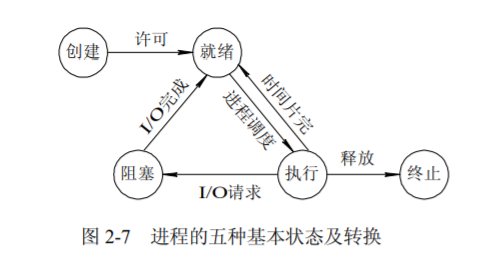
  1. 创建状态:创建一个进程一般要通过两个步骤:首先,为一个新进程创建 PCB,并填写必要的管理信息;其次,把该进程转入就绪状态并插入就绪队列之中。
  2. 终止状态;进程的终止也要通过两个步骤:首先等待操作系统进行善后处理;然后将其 PCB 清零,并将 PCB 空间返还系统。

5态模型的转换(创建、终止)
7态模型的转换
6 进程控制块

进程控制块定义

  • PCB(Process Control Block)记录了操作系统所需的、用于描述进程的当前情况以及控制进程运行的全部信息。
  • OS用于管理进程物理实体,刻画进程的执行现状,控制进程的执行。

进程控制块信息

  • 进程标识信息(用于唯一的标识进程)

    1. 系统进程标识符(操作系统分配的进程标识符)
    2. 用户进程标识符(用户自定义的进程名、进程组名)
  • 进程状态信息(用于存放该进程运行时的处理器现场信息)

    1. 寄存器内容
      1. 用户可见寄存器内容:数据寄存器、地址寄存器
      2. 控制与状态寄存器内容:程序计数器PC、指令寄存器IR、程序状态字PSW
    2. 核心栈与用户栈指针内容
  • 进程控制信息:用于存放与管理、调度进程相关的信息

    1. 进程组成信息:代码/数据地址、外存映像地址
    2. 进程通信信息:消息队列、信号量、锁
    3. 进程权限信息:内存访问权限、处理器特权
    4. 处理器使用信息:占用的处理器、时间片、处理器使用事件/已执行总时间、记账信息
    5. 资源清单信息:正占用的资源、已使用的资源
  • 进程调度信息

    1. 进程状态,指明进程的当前状态,作为进程调度和对换时的依据;
    2. 进程优先级,用于描述进程使用处理机的优先级别的一个整数,优先级高的进程应优先获得处理机;
    3. 进程调度所需的其它信息,它们与所采用的进程调度算法有关,比如,进程已等待 CPU 的时间总和、进程已执行的时间总和等;
    4. 事件,指进程由执行状态转变为阻塞状态所等待发生的事件,即阻塞原因。

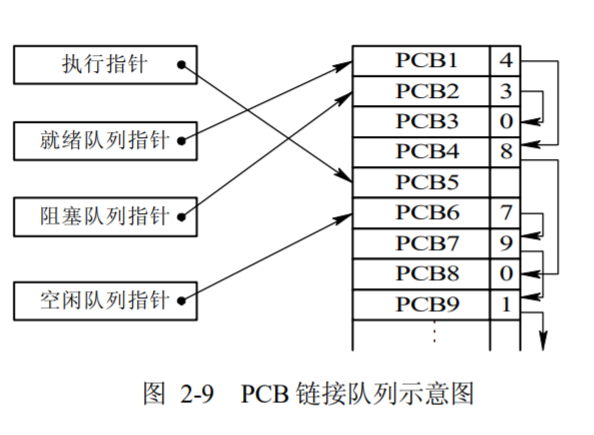
进程控制块的组织方式

  1. 链接方式这是把具有同一状态的 PCB,用其中的链接字链接成一个队列。这样,可以形成就绪队列、若干个阻塞队列和空白队列等。
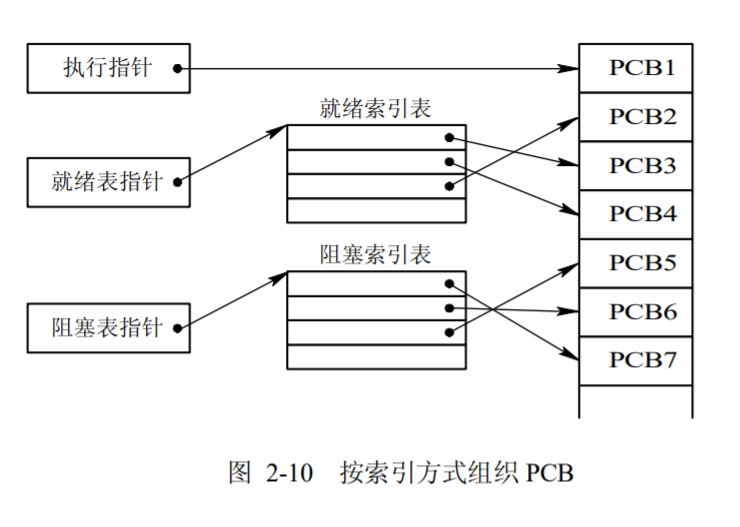
  2. 索引方式系统根据所有进程的状态建立几张索引表。例如,就绪索引表、阻塞索引表等。
1
2
3
4
5
6
7
8
9
10
11
12
13
14
15
16
17
18
19
20
21
22
23
24
25
26
27
28
29
30
31
32
33
34
35
36
37
38
39
40
41
42
43
44
45
46
47
48
49
50
51
52
53
54
55
56
57
58
59
60
61
62
63
64
65
66
67
68
69
70
71
72
73
74
75
76
77
78
79
80
81
82
83
84
85
86
87
88
89
90
91
92
93
94
95
96
97
98
99
100
101
102
103
104
105
106
107
108
109
110
111
112
113
114
115
116
117
118
119
120
121
122
123
124
125
126
127
128
129
130
131
132
133
134
135
136
137
138
139
140
141
142
143
144
145
146
147
148
149
150
151
152
153
154
155
156
157
158
159
160
161
162
163
164
165
166
167
168
169
170
171
172
173
174
175
176
177
178
179
180
181
182
183
184
185
186
187
188
189
190
191
192
193
194
195
196
197
198
199
200
201
202
203
204
205
206
207
208
209
210
211
212
213
214
215
216
217
218
219
220
221
222
223
224
225
226
227
228
229
230
231
232
233
234
235
236
237
238
239
240
241
242
243
244
245
246
247
248
249
250
251
252
253
254
255
256
257
258
259
260
261
262
263
264
265
266
267
268
269
270
271
272
273
274
275
276
277
278
279
280
281
282
283
284
285
286
287
288
289
290
291
292
293
294
295
296
297
298
299
300
301
302
303
304
305
306
307
308
309
310
311
312
313
314
315
316
317
318
319
320
321
322
323
324
325
326
327
struct task_struct {
volatile long state; /* -1 unrunnable, 0 runnable, >0 stopped */
void *stack;
atomic_t usage;
unsigned int flags; /* per process flags, defined below */
unsigned int ptrace;

int lock_depth; /* BKL lock depth */

#ifdef CONFIG_SMP
#ifdef __ARCH_WANT_UNLOCKED_CTXSW
int oncpu;
#endif
#endif

int prio, static_prio, normal_prio;
unsigned int rt_priority;
const struct sched_class *sched_class;
struct sched_entity se;
struct sched_rt_entity rt;

#ifdef CONFIG_PREEMPT_NOTIFIERS
/* list of struct preempt_notifier: */
struct hlist_head preempt_notifiers;
#endif

/*
* fpu_counter contains the number of consecutive context switches
* that the FPU is used. If this is over a threshold, the lazy fpu
* saving becomes unlazy to save the trap. This is an unsigned char
* so that after 256 times the counter wraps and the behavior turns
* lazy again; this to deal with bursty apps that only use FPU for
* a short time
*/
unsigned char fpu_counter;
#ifdef CONFIG_BLK_DEV_IO_TRACE
unsigned int btrace_seq;
#endif

unsigned int policy;
cpumask_t cpus_allowed;

#ifdef CONFIG_TREE_PREEMPT_RCU
int rcu_read_lock_nesting;
char rcu_read_unlock_special;
struct rcu_node *rcu_blocked_node;
struct list_head rcu_node_entry;
#endif /* #ifdef CONFIG_TREE_PREEMPT_RCU */

#if defined(CONFIG_SCHEDSTATS) || defined(CONFIG_TASK_DELAY_ACCT)
struct sched_info sched_info;
#endif

struct list_head tasks;
struct plist_node pushable_tasks;

struct mm_struct *mm, *active_mm;

/* task state */
int exit_state;
int exit_code, exit_signal;
int pdeath_signal; /* The signal sent when the parent dies */
unsigned int personality;
unsigned did_exec:1;
unsigned in_execve:1; /* Tell the LSMs that the process is doing an
* execve */
unsigned in_iowait:1;


/* Revert to default priority/policy when forking */
unsigned sched_reset_on_fork:1;

pid_t pid;
pid_t tgid;

#ifdef CONFIG_CC_STACKPROTECTOR
/* Canary value for the -fstack-protector gcc feature */
unsigned long stack_canary;
#endif

/*
* pointers to (original) parent process, youngest child, younger sibling,
* older sibling, respectively. (p->father can be replaced with
* p->real_parent->pid)
*/
struct task_struct *real_parent; /* real parent process */
struct task_struct *parent; /* recipient of SIGCHLD, wait4() reports */
/*
* children/sibling forms the list of my natural children
*/
struct list_head children; /* list of my children */
struct list_head sibling; /* linkage in my parent's children list */
struct task_struct *group_leader; /* threadgroup leader */

/*
* ptraced is the list of tasks this task is using ptrace on.
* This includes both natural children and PTRACE_ATTACH targets.
* p->ptrace_entry is p's link on the p->parent->ptraced list.
*/
struct list_head ptraced;
struct list_head ptrace_entry;

/*
* This is the tracer handle for the ptrace BTS extension.
* This field actually belongs to the ptracer task.
*/
struct bts_context *bts;

/* PID/PID hash table linkage. */
struct pid_link pids[PIDTYPE_MAX];
struct list_head thread_group;

struct completion *vfork_done; /* for vfork() */
int __user *set_child_tid; /* CLONE_CHILD_SETTID */
int __user *clear_child_tid; /* CLONE_CHILD_CLEARTID */

cputime_t utime, stime, utimescaled, stimescaled;
cputime_t gtime;
cputime_t prev_utime, prev_stime;
unsigned long nvcsw, nivcsw; /* context switch counts */
struct timespec start_time; /* monotonic time */
struct timespec real_start_time; /* boot based time */
/* mm fault and swap info: this can arguably be seen as either mm-specific or thread-specific */
unsigned long min_flt, maj_flt;

struct task_cputime cputime_expires;
struct list_head cpu_timers[3];

/* process credentials */
const struct cred *real_cred; /* objective and real subjective task
* credentials (COW) */
const struct cred *cred; /* effective (overridable) subjective task
* credentials (COW) */
struct mutex cred_guard_mutex; /* guard against foreign influences on
* credential calculations
* (notably. ptrace) */
struct cred *replacement_session_keyring; /* for KEYCTL_SESSION_TO_PARENT */

char comm[TASK_COMM_LEN]; /* executable name excluding path
- access with [gs]et_task_comm (which lock
it with task_lock())
- initialized normally by flush_old_exec */
/* file system info */
int link_count, total_link_count;
#ifdef CONFIG_SYSVIPC
/* ipc stuff */
struct sysv_sem sysvsem;
#endif
#ifdef CONFIG_DETECT_HUNG_TASK
/* hung task detection */
unsigned long last_switch_count;
#endif
/* CPU-specific state of this task */
struct thread_struct thread;
/* filesystem information */
struct fs_struct *fs;
/* open file information */
struct files_struct *files;
/* namespaces */
struct nsproxy *nsproxy;
/* signal handlers */
struct signal_struct *signal;
struct sighand_struct *sighand;

sigset_t blocked, real_blocked;
sigset_t saved_sigmask; /* restored if set_restore_sigmask() was used */
struct sigpending pending;

unsigned long sas_ss_sp;
size_t sas_ss_size;
int (*notifier)(void *priv);
void *notifier_data;
sigset_t *notifier_mask;
struct audit_context *audit_context;
#ifdef CONFIG_AUDITSYSCALL
uid_t loginuid;
unsigned int sessionid;
#endif
seccomp_t seccomp;

/* Thread group tracking */
u32 parent_exec_id;
u32 self_exec_id;
/* Protection of (de-)allocation: mm, files, fs, tty, keyrings, mems_allowed,
* mempolicy */
spinlock_t alloc_lock;

#ifdef CONFIG_GENERIC_HARDIRQS
/* IRQ handler threads */
struct irqaction *irqaction;
#endif

/* Protection of the PI data structures: */
spinlock_t pi_lock;

#ifdef CONFIG_RT_MUTEXES
/* PI waiters blocked on a rt_mutex held by this task */
struct plist_head pi_waiters;
/* Deadlock detection and priority inheritance handling */
struct rt_mutex_waiter *pi_blocked_on;
#endif

#ifdef CONFIG_DEBUG_MUTEXES
/* mutex deadlock detection */
struct mutex_waiter *blocked_on;
#endif
#ifdef CONFIG_TRACE_IRQFLAGS
unsigned int irq_events;
int hardirqs_enabled;
unsigned long hardirq_enable_ip;
unsigned int hardirq_enable_event;
unsigned long hardirq_disable_ip;
unsigned int hardirq_disable_event;
int softirqs_enabled;
unsigned long softirq_disable_ip;
unsigned int softirq_disable_event;
unsigned long softirq_enable_ip;
unsigned int softirq_enable_event;
int hardirq_context;
int softirq_context;
#endif
#ifdef CONFIG_LOCKDEP
# define MAX_LOCK_DEPTH 48UL
u64 curr_chain_key;
int lockdep_depth;
unsigned int lockdep_recursion;
struct held_lock held_locks[MAX_LOCK_DEPTH];
gfp_t lockdep_reclaim_gfp;
#endif

/* journalling filesystem info */
void *journal_info;

/* stacked block device info */
struct bio *bio_list, **bio_tail;

/* VM state */
struct reclaim_state *reclaim_state;

struct backing_dev_info *backing_dev_info;

struct io_context *io_context;

unsigned long ptrace_message;
siginfo_t *last_siginfo; /* For ptrace use. */
struct task_io_accounting ioac;
#if defined(CONFIG_TASK_XACCT)
u64 acct_rss_mem1; /* accumulated rss usage */
u64 acct_vm_mem1; /* accumulated virtual memory usage */
cputime_t acct_timexpd; /* stime + utime since last update */
#endif
#ifdef CONFIG_CPUSETS
nodemask_t mems_allowed; /* Protected by alloc_lock */
int cpuset_mem_spread_rotor;
#endif
#ifdef CONFIG_CGROUPS
/* Control Group info protected by css_set_lock */
struct css_set *cgroups;
/* cg_list protected by css_set_lock and tsk->alloc_lock */
struct list_head cg_list;
#endif
#ifdef CONFIG_FUTEX
struct robust_list_head __user *robust_list;
#ifdef CONFIG_COMPAT
struct compat_robust_list_head __user *compat_robust_list;
#endif
struct list_head pi_state_list;
struct futex_pi_state *pi_state_cache;
#endif
#ifdef CONFIG_PERF_EVENTS
struct perf_event_context *perf_event_ctxp;
struct mutex perf_event_mutex;
struct list_head perf_event_list;
#endif
#ifdef CONFIG_NUMA
struct mempolicy *mempolicy; /* Protected by alloc_lock */
short il_next;
#endif
atomic_t fs_excl; /* holding fs exclusive resources */
struct rcu_head rcu;

/*
* cache last used pipe for splice
*/
struct pipe_inode_info *splice_pipe;
#ifdef CONFIG_TASK_DELAY_ACCT
struct task_delay_info *delays;
#endif
#ifdef CONFIG_FAULT_INJECTION
int make_it_fail;
#endif
struct prop_local_single dirties;
#ifdef CONFIG_LATENCYTOP
int latency_record_count;
struct latency_record latency_record[LT_SAVECOUNT];
#endif
/*
* time slack values; these are used to round up poll() and
* select() etc timeout values. These are in nanoseconds.
*/
unsigned long timer_slack_ns;
unsigned long default_timer_slack_ns;

struct list_head *scm_work_list;
#ifdef CONFIG_FUNCTION_GRAPH_TRACER
/* Index of current stored adress in ret_stack */
int curr_ret_stack;
/* Stack of return addresses for return function tracing */
struct ftrace_ret_stack *ret_stack;
/* time stamp for last schedule */
unsigned long long ftrace_timestamp;
/*
* Number of functions that haven't been traced
* because of depth overrun.
*/
atomic_t trace_overrun;
/* Pause for the tracing */
atomic_t tracing_graph_pause;
#endif
#ifdef CONFIG_TRACING
/* state flags for use by tracers */
unsigned long trace;
/* bitmask of trace recursion */
unsigned long trace_recursion;
#endif /* CONFIG_TRACING */
unsigned long stack_start;
};