5 简化条件表达式 1 Decompose Conditional(分解条件表达式) 复杂的条件逻辑会降低代码的可读性,通过从if/else if/else三个段落中分别提炼出独立的函数,根据每一段落的用途命名函数,从而更清晰地表达自己的意图。
重构示例13 1 2 3 4 5 6 // 重构前 if (date.Before(SUMMER_START) || date.After(SUMMER_END)) { charge = quantity * m_winterRate + m_winterServiceCharge; } else { charge = quantity * m_summerRate; }
1 2 3 4 5 6 7 8 9 10 11 12 13 14 15 16 17 18 19 20 21 if (NotSummer(date)) { charge = WinterCharge(quantity); } else { charge = SummerCharge(quantity); } bool NotSummer (Date date) { return date.Before(SUMMER_START) || date.After(SUMMER_END) } int WinterCharge(quantity){ return quantity * m_winterRate + m_winterServiceCharge; } int SummerCharge (quantity) { return quantity * m_summerRate;; }
2 Consolidate Conditional Expression(合并条件表达式) 有时候,一系列的条件分支都得到相同的结果,可以用Consolidate Conditional Expression手法将这些条件分支合为一个条件表达式,并提炼成一个独立的函数。
重构示例14 1 2 3 4 5 6 7 8 9 10 11 12 13 14 // 重构前 double DisabilityAmount() { if (m_seniority < 2) { return 0; } if (m_monthsDisabled > 12) { return 0; } if (m_isPartTime) { return 0; } // ... }
1 2 3 4 5 6 7 8 9 10 11 12 13 double DisabilityAmount () { if (IsNotEligibleForDisability()) { return 0 ; } } bool IsNotEligibleForDisability () { return m_seniority < 2 || m_monthsDisabled > 12 || m_isPartTime; }
3 Consolidate Duplicate Conditional Fragments(合并重复的条件片段) 如果在条件表达式的每个分支上有着相同的一段代码,可以使用Consolidate Duplicate Conditional Fragments将这段重复代码搬移到条件表达式之外。
重构示例15 // 重构前
1 2 3 4 5 6 7 8 ```C // 重构后 if(IsSpecialDeal()) { total = price * 0.95; } else { total = price * 0.98; } Send();
4 Remove Control Flag (移除控制标记) 在一系列的条件表达式中,常常存在一个用于判断何时停止条件检查的控制标志。这源于结构化编程原则的“每个子程序只能有一个入口和一个出口”,但这样也降低了代码的可读性。可以通过break/continue/return来替换掉控制标志,提升代码可读性。
重构示例16 1 2 3 4 5 6 7 8 9 10 11 12 13 14 15 16 17 // 重构前 void CheckSecurity(vector<string>& peoples) { bool isFound = false; for (auto& people : peoples) { if (!isFound) { if (people == "Don") { SendAlert(); isFound = true; } if (people == "John") { SendAlert(); isFound = true; } } } }
1 2 3 4 5 6 7 8 9 10 11 12 13 14 // 重构后 void CheckSecurity(vector<string>& peoples) { for (auto& people : peoples) { if (people == "Don") { SendAlert(); break; } if (people == "John") { SendAlert(); break; } } }
5 Replace Nested Conditional with Guard Clauses(以卫语句取代嵌套条件表达式) 嵌套的if/else语句式造成代码可读性差的罪魁祸首之一,它让人难以看清正常的执行路径。这时,可以通过使用卫语句表现所有特殊情况(最常见的就是对条件进行反转)来消除嵌套的条件表达式,提高代码可读性。
重构示例17 1 2 3 4 5 6 7 8 9 10 11 // 重构前 double GetAdjustedCapital() { double result = 0.0; if (m_capital > 0.0) { if (m_intRate > 0.0 && m_duration > 0.0) { result = (m_income / m_duration) * ADJ_FACTOR; } } return result; }
1 2 3 4 5 6 7 8 9 10 11 double GetAdjustedCapital () { if (m_capital <= 0.0 ) { return 0.0 ; } if (m_intRate <= 0.0 || m_duration <= 0.0 ) { return 0.0 ; } return (m_income / m_duration) * ADJ_FACTOR; }
6 Replace Conditional with Polymorphism(以多态取代条件表达式) 该手法有点类似于Replace Type Code with Subclasses,如果有个条件表达式,根据类型码的不同而选择不同的行为。这时可以通过Replace Conditional with Polymorphism,将这个条件表达式的每一个分支放进一个子类内的覆写函数中,然后将原市函数声明为抽象函数。继续以重构示例12中的代码示例为例子,我们采用Move Method将PayAmount()函数迁移到EmployeeType,并以多态来取代在其中的switch语句。
重构示例18 1 2 3 4 5 6 7 8 9 10 11 12 13 14 15 16 17 18 19 20 21 22 23 24 25 26 27 28 29 30 31 32 33 34 35 36 37 38 39 40 41 42 43 44 45 46 47 48 49 50 51 52 53 54 // 重构前 class Employee { public: Employee(int type) : m_type(EmployeeType::ValueOf(type)) {} int GetType() { return m_type->GetTypeCode(); } int PayAmount() { switch (GetType()) { case EmployeeType::ENGINEER: return m_monthlySalary; case EmployeeType::SALESMAN: return m_monthlySalary + m_commission; case EmployeeType::MANAGER: return m_monthlySalary + m_bonus; default: return -1; } } private: EmployeeType* m_type; } class EmployeeType { public: static EmployeeType* ValueOf(int code) { switch (code) { case ENGINEER: return new Engineer; case SALESMAN: return new Salesman; case MANAGER: return new Manager; default: return nullptr; } } virtual int GetTypeCode() = 0; public: static constexpr int ENGINEER = 0; static constexpr int SALESMAN = 1; static constexpr int MANAGER = 2; } class Engineer : public EmployeeType { public: int GetTypeCode() override { return EmployeeType::ENGINEER; } }
1 2 3 4 5 6 7 8 9 10 11 12 13 14 15 16 17 18 19 20 21 22 23 24 25 26 27 28 29 30 31 32 33 34 35 36 37 38 39 40 41 42 43 44 45 46 47 48 49 50 class Employee {public: Employee(int type) : m_type(EmployeeType::ValueOf(type)) {} int GetType () { return m_type->GetTypeCode(); } int PayAmount () { return m_type->PayAmount(); } private: EmployeeType* m_type; } class EmployeeType {public: static EmployeeType* ValueOf (int code) { switch (code) { case ENGINEER: return new Engineer; case SALESMAN: return new Salesman; case MANAGER: return new Manager; default : return nullptr; } } virtual int GetTypeCode () = 0 ; virtual int PayAmount () = 0 ; public: static constexpr int ENGINEER = 0 ; static constexpr int SALESMAN = 1 ; static constexpr int MANAGER = 2 ; } class Engineer :public: int GetTypeCode () override { return EmployeeType::ENGINEER; } int PayAmount () override { return m_monthlySalary; } }
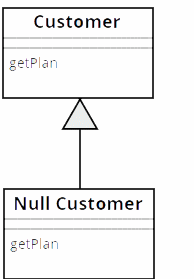
7 Introduce Null Object(引入Null对象) 引入Null对象主要是为了消除随处可见的判空逻辑,通过新建一个Null对象,并在原来返回Null的地方改成返回新建的Null对象。
Java 8中新增了一个Optional接口,相对于新建一个Null对象,更推荐使用Optional,除了可以表示Null对象的语义之外,它还提供了很多很强大的功能。C++14中也新增了std::optional,提供了类似的功能。