03 Bean配置文件
Bean配置文件
- bean配置文件:spring配置bean的文件。
- java Bean配置文件,通过@Configuration加载
- XML Bean配置文件,xml定义的配置文件
- 属性配置文件:spring配置key-value的文件
1 注解说明
注解体系
- 元注解@Rentention @Docemented,@Inherited,@Target
- JDK标准注解
- Spring标准注解@Bean @Component @Serivce,@Controller,@Configuration,@Import,@Autowire
- springboot补充注解
导入容器
spring导入容器主要有三种方式
- 标准组件:@Compoent、@Repository、@Service、@Controller四种类型的组件。通过@ComponentScan定义的扫描路径扫描后,导入到Spring容器中。
- 自动配置:通过@Configuration定义的配置类。通过@EnableAutoConfiguration注解定义扫描 主类包路径下的所有配置类 和 SpringFactories加载的spirng配置文件中声明的全类名,扫描后导入到Spring容器中。
- 导入配置:通过@Import和@ImportResource注解导入类。通过这两个注解可以间接导入第三方、XML Bean配置文件中的组件。
这三种导入的组件都有其开启的方式,定义了扫描的范围。如果允许以上注解标识的组件导入到容器中,就必须满足其开启条件。
导入容器还需要注意一下规则
- 扫描到组件并不代表一定加载组件,导入组件都受到@Condition注解的过滤和影响。
- 导入组件可以规定顺序,通过@AutoConfigurOrder 和 @AutoConfigureAfter
@SpringbootConApplication开启自动配置
1 | @SpringBootConfiguration springboot启动 |
springboot项目中的启动注解。
@Configuration配置文件
- 配置类里边使用@Bean标注在方法上,给容器注册组件,默认也是单实例模式。
- 配置类本身也是组件,相当于将组件注册到Spring当中。即把类的对象交给Spring管理。
- proxybeanMethods:代理bean方法,将配置类的中的方法设置为单例模式。可以解决组件间的依赖问题。默认为true,使用spring中的方法代理原方法,不会创建新的对象。
- full(proxyBeanMehtods=true)
- lite(proxyBeanMethods=false)
1 | //告诉SpringBoot这是一个配置类 == 配置文件 |
@Bean
在java配置文件中装配bean
- 配置类实用@Bean标注方法上给容器注册组件,默认也是单实例。id默认为方法名。可以通过参数指定
- 外部类可以从Spring的容器中取出在Configuration类中注册的实例。而且都是单实例对象。
1 | @Component @Controller @Service @Repository 都是以前的用法 |
@Import
在java配置文件中导入bean
- 将指定的组件导入到组件。给容器中自动创建指定类型的无参构造的组件。
- 默认组件的名字是全类名。即包括包和类的名字。
1 |
|
三种导入类的方法对比
- 每个bean有名称和类型。没有id之说。名称必须唯一。
- @Bean导入的bena默认名称是方法名称
- @Import导入的bean默认是全类名
- @Component导入的bean默认是类名小写首字母。
- @Component和@Import是不会冲突,如果已经通过@Component导入的bean(优先级更高)不会通过@Import重复导入
@ImportResource
导入原生配置文件
1 | ======================beans.xml========================= |
1 |
|
@conditional
- 条件装配。满足Conditional指定的条件,则进行组件注入。
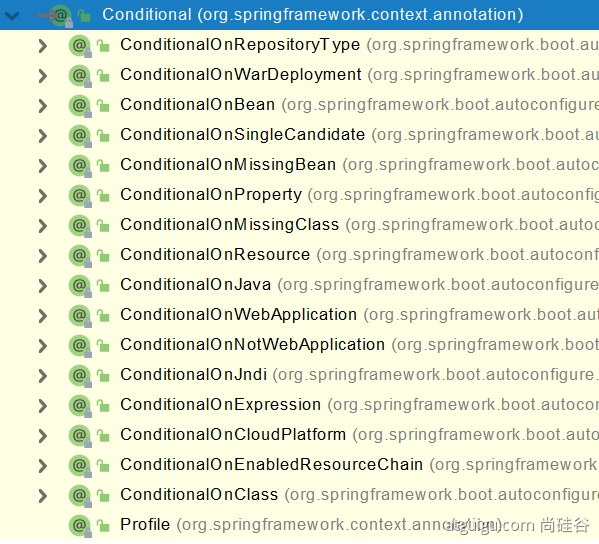
- @ConditionalOnBean(name=”bean”)当容器中存在指定名称的容器的时候,才会进行注册。
1 | @=====================测试条件装配========================== |
本博客所有文章除特别声明外,均采用 CC BY-NC-SA 4.0 许可协议。转载请注明来源 Estom的博客!
相关推荐

2020-09-10
5buffer模块
buffer模块1 模块说明作用 Buffer 类,该类用来创建一个专门存放二进制数据的缓存区 Node.js 目前支持的字符编码包括: ascii - 仅支持 7 位 ASCII 数据。如果设置去掉高位的话,这种编码是非常快的。 utf8 - 多字节编码的 Unicode 字符。许多网页和其他文档格式都使用 UTF-8 。 utf16le - 2 或 4 个字节,小字节序编码的 Unicode 字符。支持代理对(U+10000 至 U+10FFFF)。 ucs2 - utf16le 的别名。 base64 - Base64 编码。 latin1 - 一种把 Buffer 编码成一字节编码的字符串的方式。 binary - latin1 的别名。 hex - 将每个字节编码为两个十六进制字符。 2 模块应用创建Buffer 类 Buffer.alloc(size[, fill[, encoding]]): 返回一个指定大小的 * Buffer 实例,如果没有设置 fill,则默认填满 0 Buffer.allocUnsafe(size): 返回一个指定大小的 ...

2021-12-24
head
head显示文件的开头部分。 概要1head [OPTION]... [FILE]... 主要用途 在未指定行数时默认显示前10行。 处理多个文件时会在各个文件之前附加含有文件名的行。 当没有文件或文件为-时,读取标准输入。 选项12345678910111213141516171819202122-c, --bytes=[-]NUM 显示前NUM字节;如果NUM前有"-",那么会打印除了文件末尾的NUM字节以外的其他内容。-n, --lines=[-]NUM 显示前NUM行而不是默认的10行;如果NUM前有"-",那么会打印除了文件末尾的NUM行以外的其他行。-q, --quiet, --silent 不打印文件名行。-v, --verbose 总是打印文件名行。-z, --zero-terminated 行终止符为NUL而不是换行符。--help 显示帮助信息并退出。--version 显示版本信息并退出。NU...

2020-09-26
shared_axis_demo
共享轴演示通过将轴实例作为sharex或sharey kwarg传递,可以将一个轴的x或y轴限制与另一个轴共享。 更改一个轴上的轴限制将自动反映在另一个轴上,反之亦然,因此当您使用工具栏导航时,轴将在其共享轴上相互跟随。同样适用于轴缩放的变化(例如,log vs linear)。但是,刻度标签可能存在差异,例如,您可以选择性地关闭一个轴上的刻度标签。 下面的示例显示了如何在各个轴上自定义刻度标签。共享轴共享刻度定位器,刻度格式化程序,视图限制和变换(例如,对数,线性)。但是,ticklabels本身并不共享属性。这是一个功能而不是误差,因为您可能希望在上轴上使刻度标签更小,例如,在下面的示例中。 如果要关闭给定轴的刻度标签(例如,在子图(211)或子图(212)上),则无法执行标准技巧: 1setp(ax2, xticklabels=[]) 因为这会更改在所有轴之间共享的Tick格式化程序。但您可以更改标签的可见性,这是一个特性: 1setp(ax2.get_xticklabels(), visible=False) 1234567891011121314151617181...

2021-12-24
seq
seq以指定增量从首数开始打印数字到尾数 补充说明seq命令 用于产生从某个数到另外一个数之间的所有整数。 语法123seq [选项]... 尾数seq [选项]... 首数 尾数seq [选项]... 首数 增量 尾数 选项123-f, --format=格式 使用printf 样式的浮点格式-s, --separator=字符串 使用指定字符串分隔数字(默认使用:\n)-w, --equal-width 在列前添加0 使得宽度相同 实例 -f选项:指定格式 1234#seq -f"%3g" 9 1191011 %后面指定数字的位数 默认是%g,%3g那么数字位数不足部分是空格。 12345#sed -f"%03g" 9 11#seq -f"str%03g" 9 11str009str010str011 这样的话数字位数不足部分是0,%前面制定字符串。 -w选项:指定输出数字同宽 12345seq -w 98 101098099100101 不能和-f一起用,输出是同宽的...

2021-12-24
dirname
dirname去除文件名中的非目录部分 补充说明dirname命令 去除文件名中的非目录部分,仅显示与目录有关的内容。dirname命令读取指定路径名保留最后一个/及其后面的字符,删除其他部分,并写结果到标准输出。如果最后一个/后无字符,dirname 命令使用倒数第二个/,并忽略其后的所有字符。dirname 和 basename 通常在 shell 内部命令替换使用,以指定一个与指定输入文件名略有差异的输出文件名。 语法1dirname(选项)(参数) 选项12--help:显示帮助;--version:显示版本号。 实例1234567891011dirname //结果为 /dirname /a/b/结果为:/adirname a结果为 .dirname a/b结果为路径名 a

2021-12-24
cmp
cmp比较两个文件是否有差异 补充说明cmp命令 用来比较两个文件是否有差异。当相互比较的两个文件完全一样时,则该指令不会显示任何信息。若发现有差异,预设会标示出第一个不通之处的字符和列数编号。若不指定任何文件名称或是所给予的文件名为“-”,则cmp指令会从标准输入设备读取数据。 语法1cmp(选项)(参数) 选项123456-c或--print-chars:除了标明差异处的十进制字码之外,一并显示该字符所对应字符;-i<字符数目>或--ignore-initial=<字符数目>:指定一个数目;-l或——verbose:标示出所有不一样的地方;-s或--quiet或——silent:不显示错误信息;-v或——version:显示版本信息;--help:在线帮助。 参数目录:比较两个文件的差异。 实例使用cmp命令比较文件”testfile”和文件”testfile1”两个文件,则输入下面的命令: 1cmp testfile testfile1 #比较两个指定的文件 在上述指令执行之前,使用cat命令查看两个指定的文件内容,如下所...